- AZJoe
- A peak into the beauty and wonder of
- the Sonoran Desert in Phoenix, Arizona
Daily Page 2 Daily page 3 Daily page 4 email: arzjoe (at) gmail.com
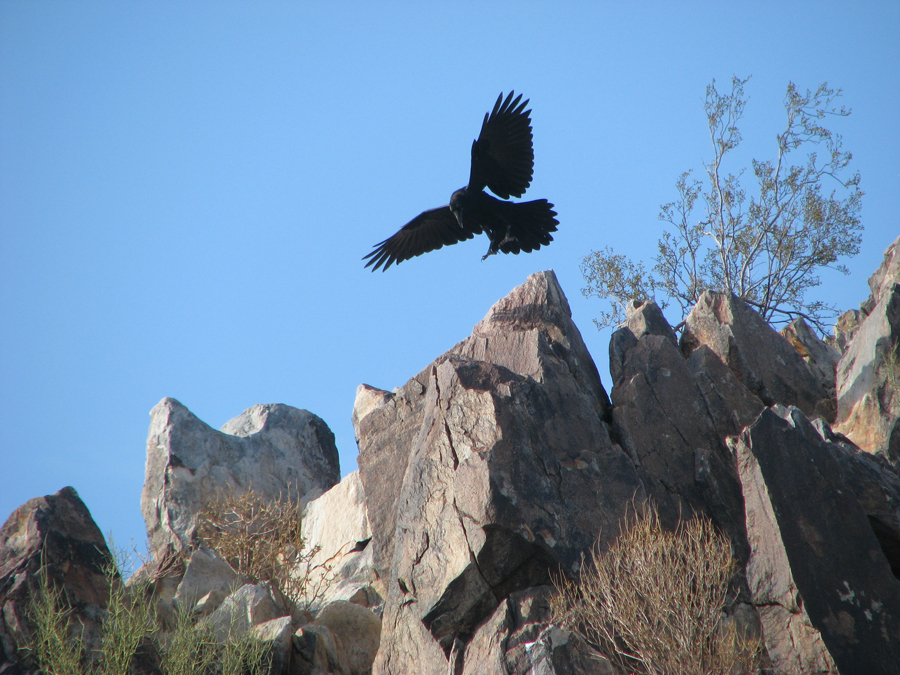
A Raven and a very light landing
The Ravens are one of the dominant species in The Park. They are incredible flyers. I have watched them duel with the Red-tailed Hawks, and the Ravens have a bit of en edge. This surprised me as I watched a few video clips of these encounters. There is one thing though that the Red-tailed Hawk does better than the Raven; the high-speed dive.
This image came from a day of play for 3 Ravens in The Park near my house. It was windy, nice and steady, and they decided to spend an hour playing in it.
I have a photo of the 3 of them further down my blog, along with a video.
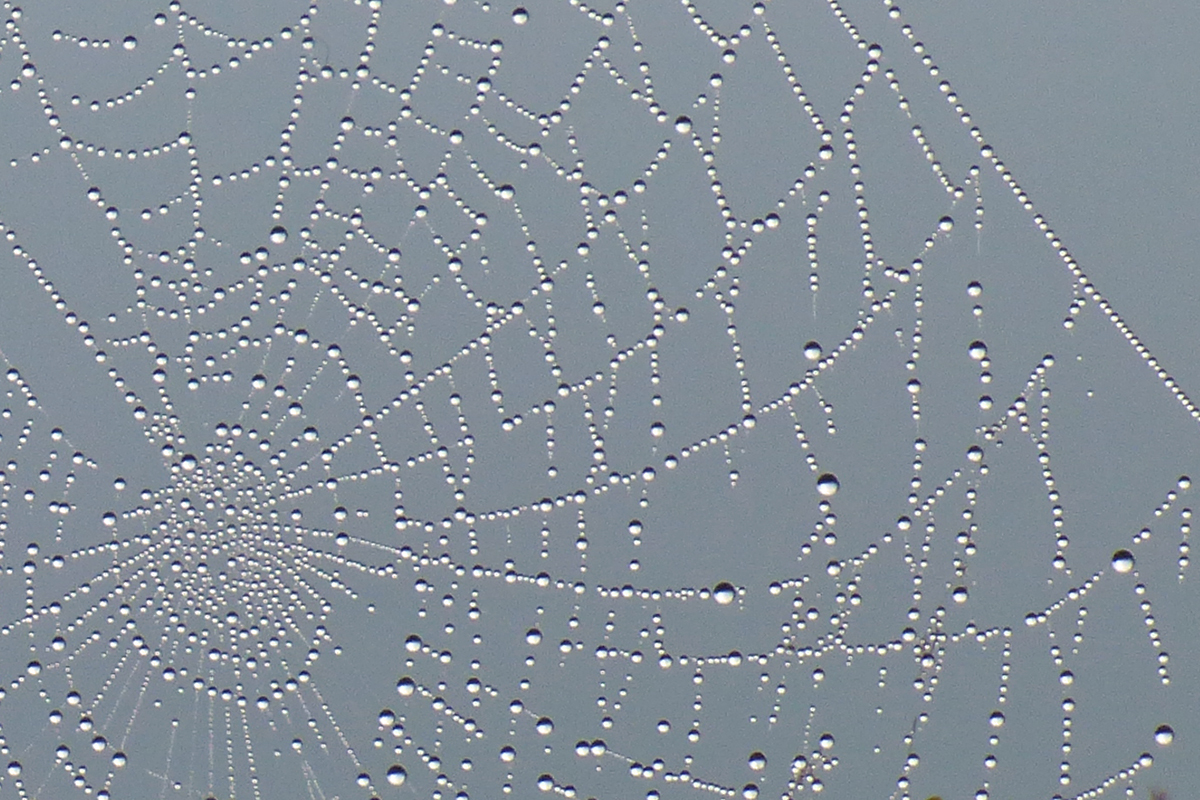
From the Fog emerge Strands of Jewels
On Super Fog day, last Sunday Feb. 1, I was fortunate to encounter something for the first time: several spider webs hanging in Palo Verde trees, each carrying hundreds and hundreds of micro water-droplets. Fog is a great way to deliver water to these delicate webs, doing so with a gentleness that allows the webs to hold onto them without breaking or dropping, even as they enlarge. These bejeweled spider webs were completely invisible against the white sky. It wasn't until I stepped up to a dark background did they emerge.
There were about 6 of these webs strung across 3 trees that were visible from my vantage point. Even with the dark-ish background, they are still kinda tricky to see. Thank goodness for photography. As much as I looked at these webs while I was out there, I couldn't see how amazing they really were. It wasn't until the images were enlarged that the fine detail of the suspended droplets became real to my perception.
This image to the left is a crop of one of the larger webs that I photographed, at about 5" in diameter. Some of the droplets are so tiny that a grain of salt would likely dwarf them. I did a rough count of the number of strung-out spheres in this crop; nearly, if not more than, 1000.
There are many jewels in the desert that are easy to miss : )
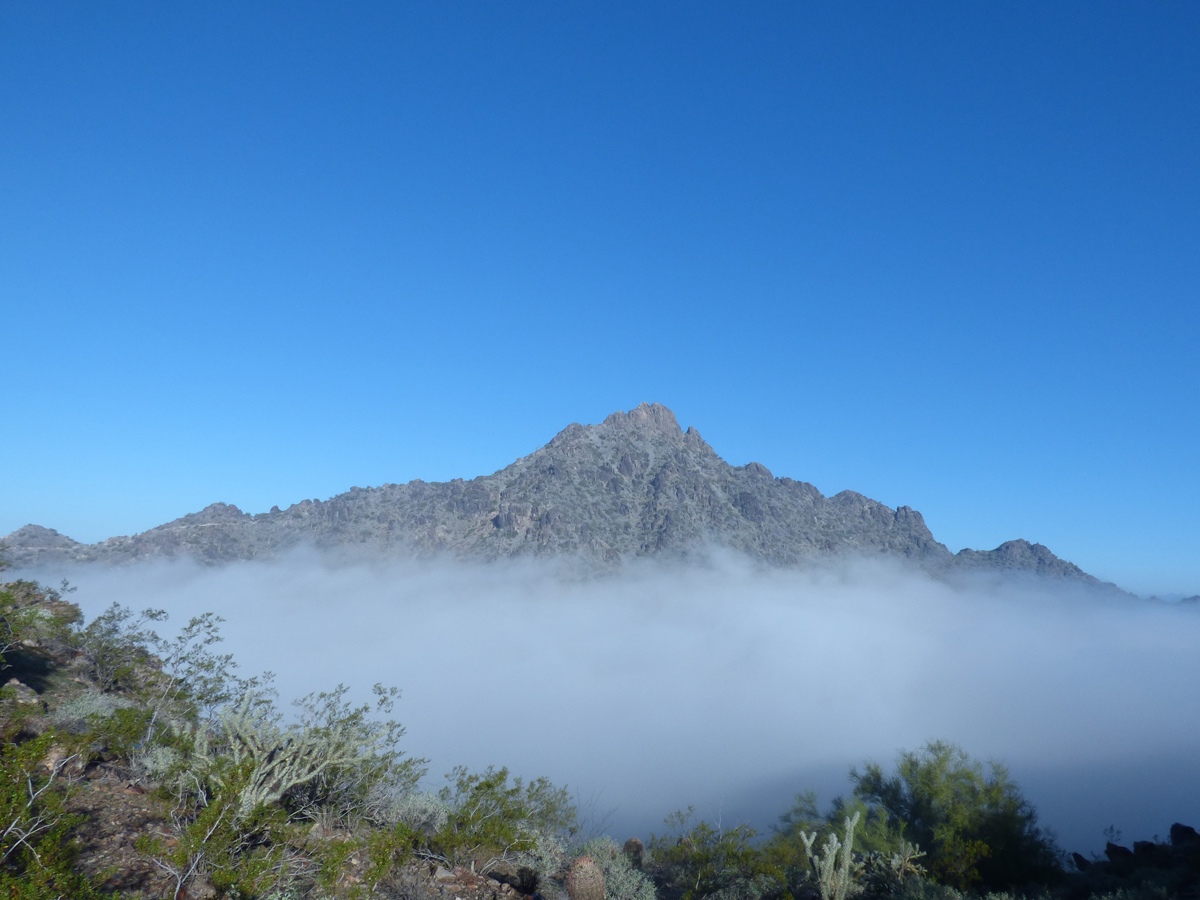
A Super Day of Fog in the Sonoran Desert
Since before the day I was born way back when, here in Phoenix, I have never seen fog so thick and wide. It took me a while to realize what was going on this morning. I quickly decided that I needed to get up into it, and maybe even above it. I rode my bike to the main park entrance, and hiked to the small peak opposite. On the ride over, and for most of the hike up, I was in the middle of the fog. The air was so wet, droplets were forming on my helmet and hoodie. Visibility was low, at less than 100 ft. Now and then one of the peaks would peak through a break, then disappear again. Otherwise the sky was pure white. It kept rolling in and along.
All of Phoenix was hidden beneath a sea of Fog. Every single building was cloaked. It was peaceful and powerful. It felt surreal as I watched the city fully engulfed in an enormous flood, a gentle, floating and flowing flood of suspended water.
I find the timing of this super fog very interesting. Storms have been building up to this all week long. This parallels the way that the sports world has been descending on the city, building up all week too. With the big game being played today, the pinnacle has arrived, and Phoenix is unofficially the most intense place in the world.
Was the weather simply matching that pinnacle and energy?
What a super day so far : )
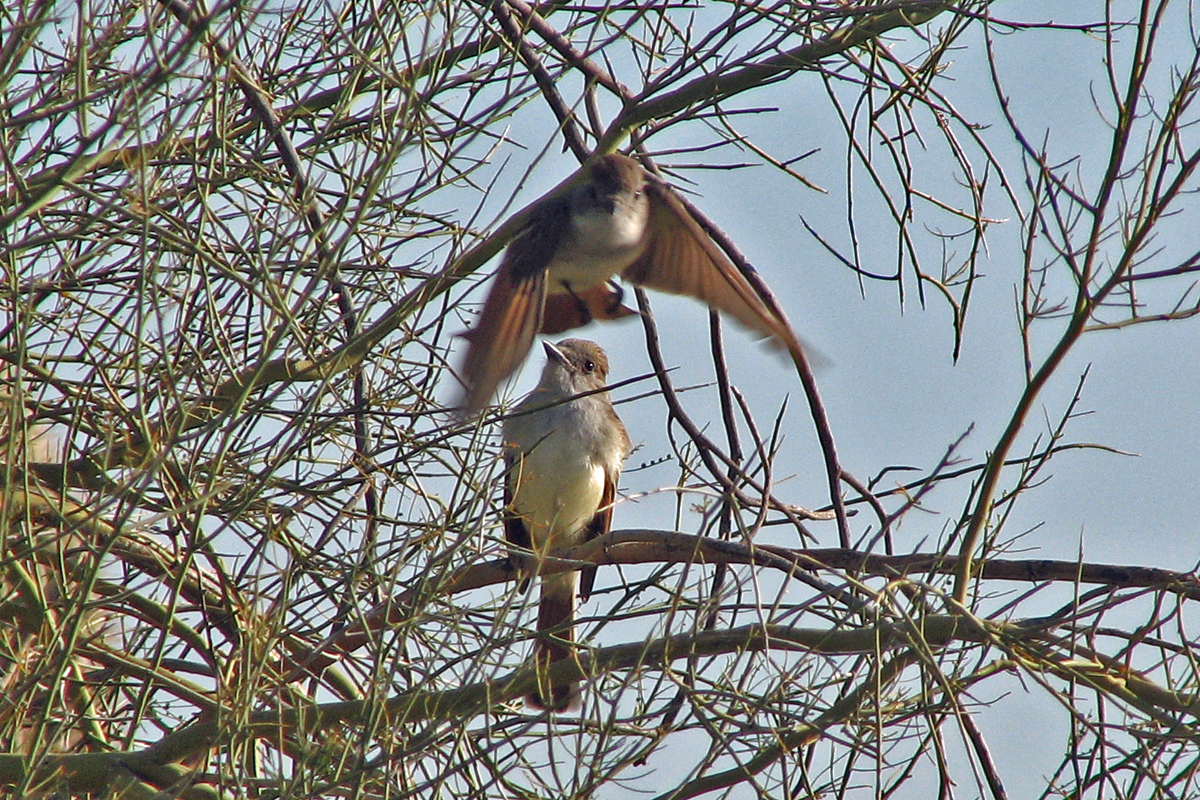
Ash-throated Flycatcher pair
These birds are some of the finest flyers in The Park. Watching them hunt bugs out of the air can be very entertaining. Their agility and aerobatic ability are among the best in The Park.
They are also quite aggressive. I've seen them chase birds of all sorts and sizes, and have never seen them being chased by another bird. I can imagine a Thrasher or Mockingbird would take a shot at them, but I haven't seen that happen.
They have a bit of yellow on their bellies, which really stands out in the right light. This can be seen on the perched bird shown to the image. I sure love seeing such flashes of color.
There are a lot of different flycatcher species in The Park, and these are one of the more prolific.
Below is a video of these two do doing their thing.
In the video, I like how the second one flies into the picture at 28 seconds, then they both hop around until they find a comfortable position. Once settled in they get about to the business of preening, with some nice singing mixed in.
Thanks for sharing some of your day with me : )
Ash-throated Flycatcher pair preening and singing
How I love watching and listening to animal couples going about their daily affairs. They are all so different from one another, even those who have a lot of similarities.
For example, the Mockingbird and the Ash-throated are similar and different. They are about the same size with the Flycatcher being a slightly larger. They both catch and eat bugs right out of the air, also known as eating on-the-wing. They are both exceptional flyers.
They are also some of the most aggressive critters in the entire park, in different ways.
The Mockingbird will go after a wide range of animals, including Coyotes. These attacks are light in nature, usually a repeated series of pecking flybys.The Ash-throated goes after other birds only, as far as I have seen. Also, their attacks seem more forceful, like they are intent on hurting the other bird. I have seen them dominate one of the finest flyers in The Park, the Lesser Nighthawk, which looked pretty freaked out during the encounter.
The greatest differences come by way of songs and markings.
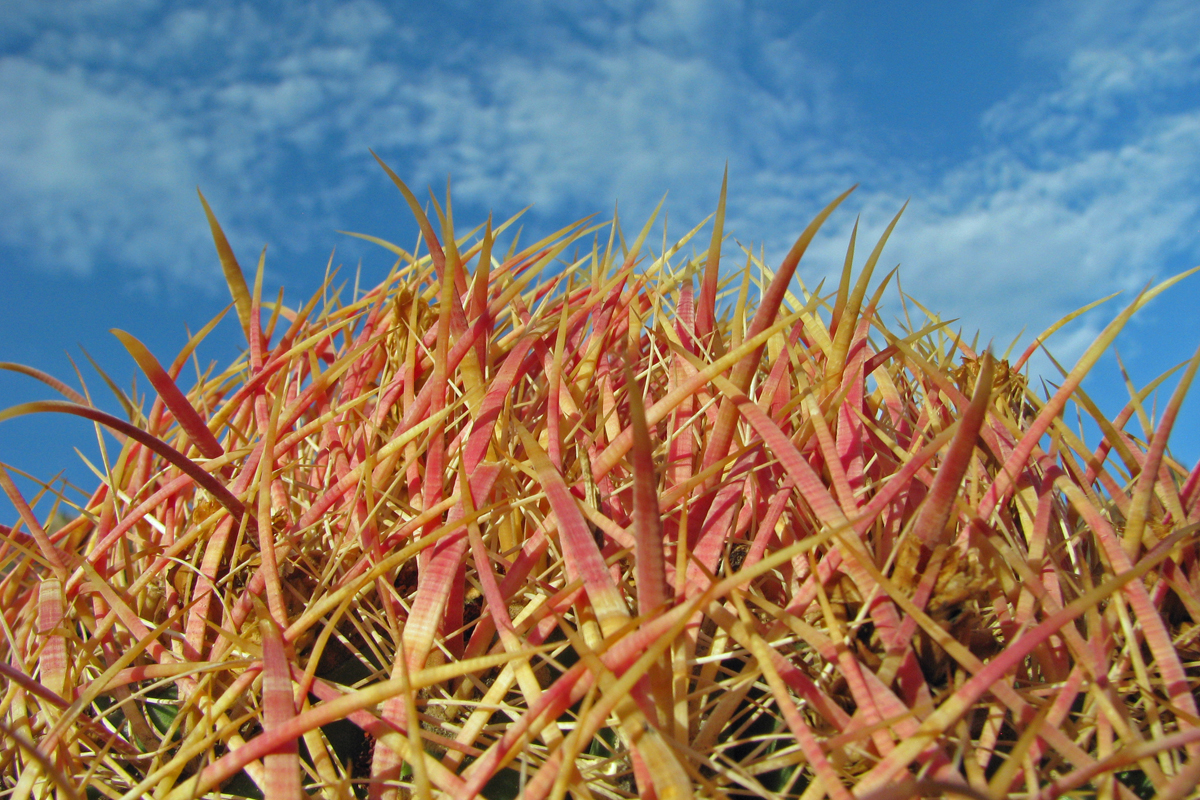
Barrel Cactus spines meet The Sky
I love when certain earth elements combine with sky elements. So much contrast yet so much harmony. The red-peach-yellow gradations of color really do something to me, especially against the blue and white of the sky.
This image clearly shows the curved nature of the Barrel Cactus spines, one of the few cacti in The Park that have such a feature. This, along with the fact that the ends are not barbed, makes for one of the friendlier cacti around.
When my niece and nephew were young, this is the cactus that I used to teach them about the sharp nature of cactus spines. With my guidance I had them lightly touch the end of one of the spines, feeling the sharpness. They each had a brief "ouch" experience that was superficial and enlightening. Soon they were gently feeling other spines on this cactus, exploring its power. They learned to respect and admire the cacti of The Park, without the fear that is often associated with them.
This colorful cactus image is yet another great example of the masterful artistic compositions that fill The Park. Thanks for sharing so much beauty with us : )
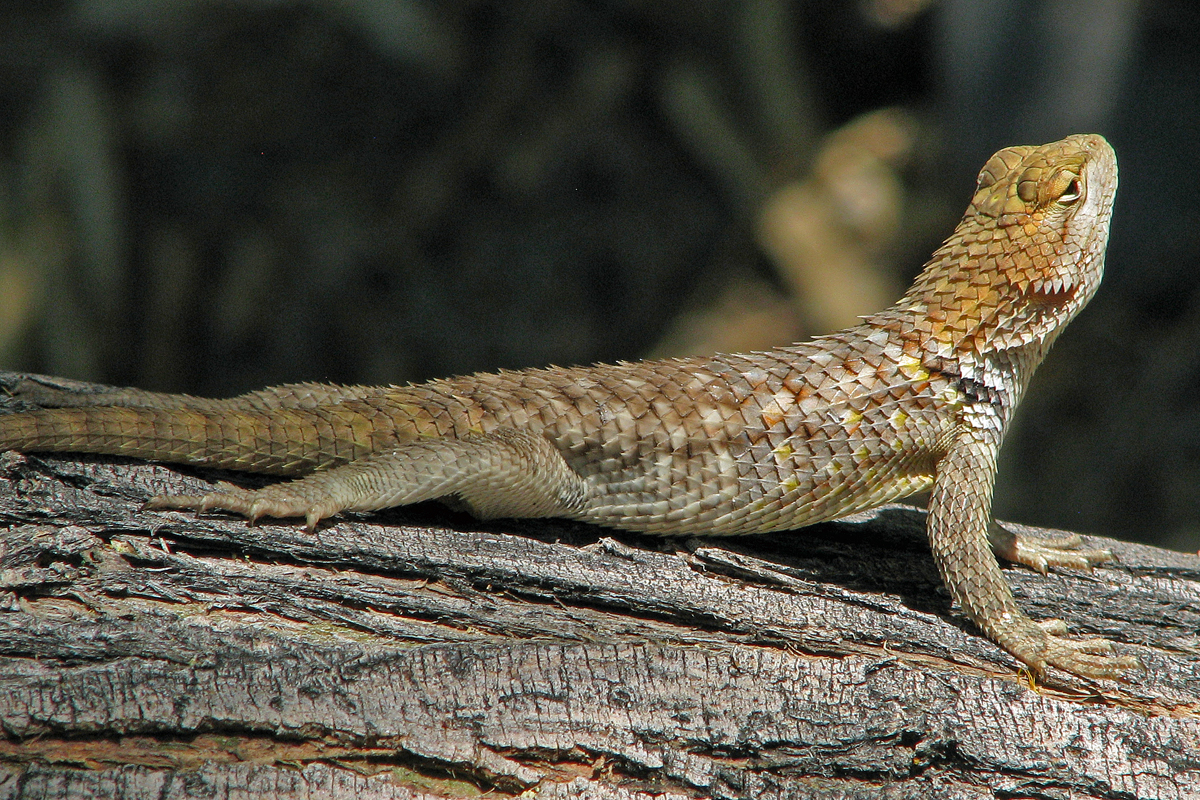
Desert Spiny Lizard, female
Keep looking up and into the light! What a magnificent little creature we share the earth with. Look that that face, so alert and so deeply connected to source. They're also much older than we humans are, and appear very comfortable on this planet.
This is one of the many lizards that make The Park home. This is a medium-sized species, considerably smaller than the Chuckwalla and Gila Monster.
The colorization of the Spiny Lizard can be quite varied. This particular one is mostly browns and yellows and whites. I've also seen blues and greens.
The males are quite a bit smaller than the females, and less colorful. It's funny how such variations happens in nature; sometimes it is the male who is larger and more colorful, sometimes it is the female who is larger and less colorful, and sometimes it is the male who is smaller and more colorful.
My guess is that this particular surface-crawler is female, and what a beauty she is : )
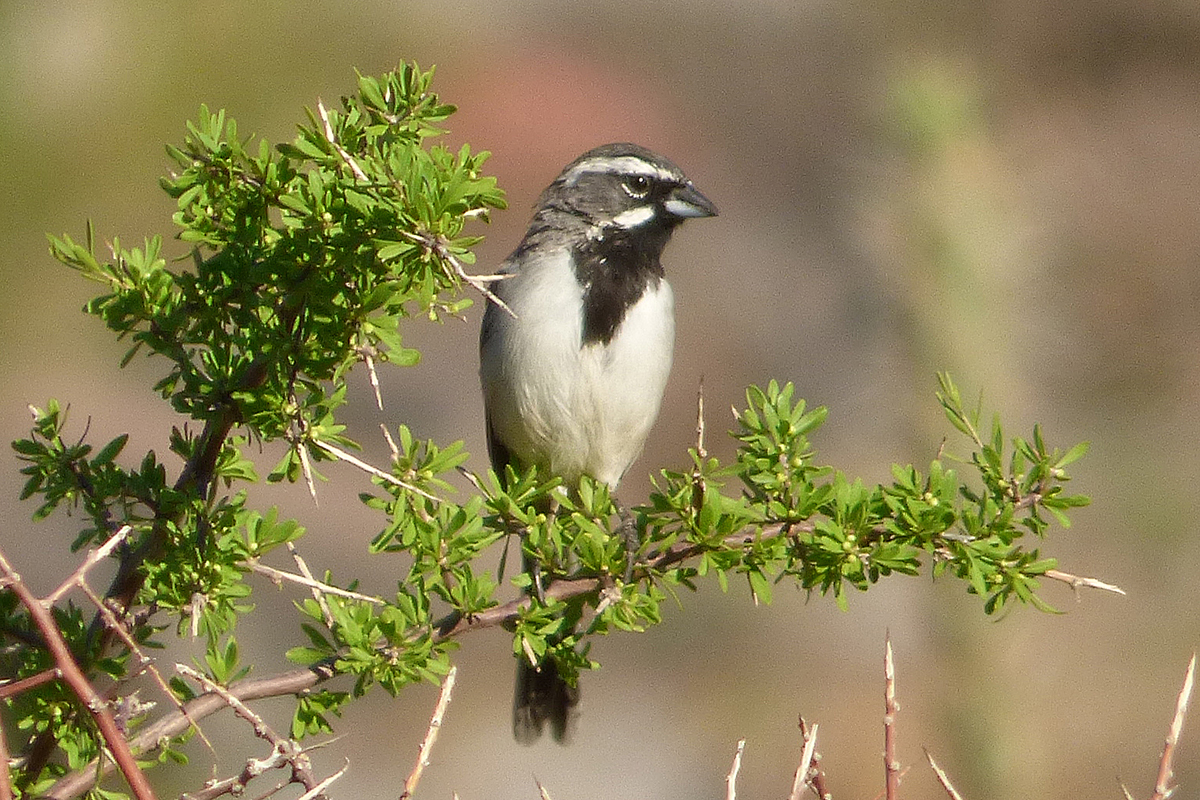
Black-throated Sparrow (Amphispiza bilineata)
What a distinctive face painting this classy looking bird has going on. I love the subdued coloration, made up of nothing more than gray, black and white. That is quite a classic look, like a serious business suit.
This sparrow is a member of the Songbird group of over 4600 birds across the globe. Some have just one song, while others have more. Of this group, the Thrasher is the king with over 2000 different songs!
The singing of a bird is so different from the way a human sings. The produced tones are so pure and melodic, and executed with such precision.
What a beautiful meditation possibility such an encounter presents, to simply stand or sit with your eyes closed, and be carried away by these magnificently performed songs, like a beautiful dance for our sense of hearing. Such a meditation can be especially dynamic when a songbird like the Mockingbird or the Thrasher let loose, with their hefty repertoire.
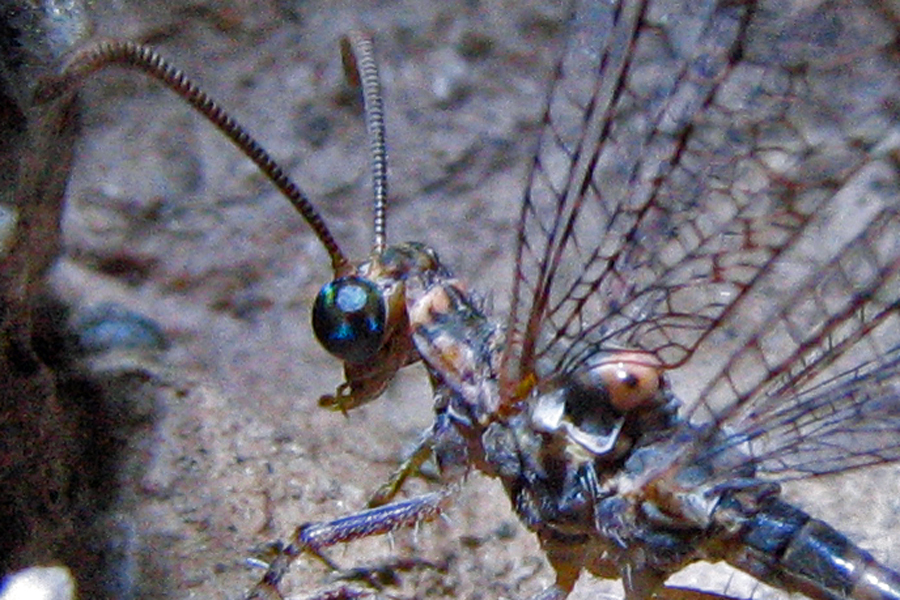
A Bejeweled Fly
I don't know what kind of flying creature this is, but it sure has some interesting things going on. The part that strikes me the most is that big sapphire-like eye. It looks like it has been facet cut, like a precious stone.
This was located at the Ranger's station in the main park area. I was shooting the bugs attracted to the outdoor light shining there. This one reminds me of a damsel fly, and was about 1.5" long.
I still, sometimes, give little thought to a bug that I encounter, thinking it is not interesting enough to explore. How wrong this can be, as shown by this photo. It is almost impossible to see the intricate design of nature's smaller creatures without some type of magnification. There is a lot going on out there in this densely-populated world that we share. And which is actually superior? Any creature that can fly without external help has a one-up on us humans. I'd love to simply fly from one place to another, like so many bugs do everyday.
Cameras are marvelous for capturing such close images : )
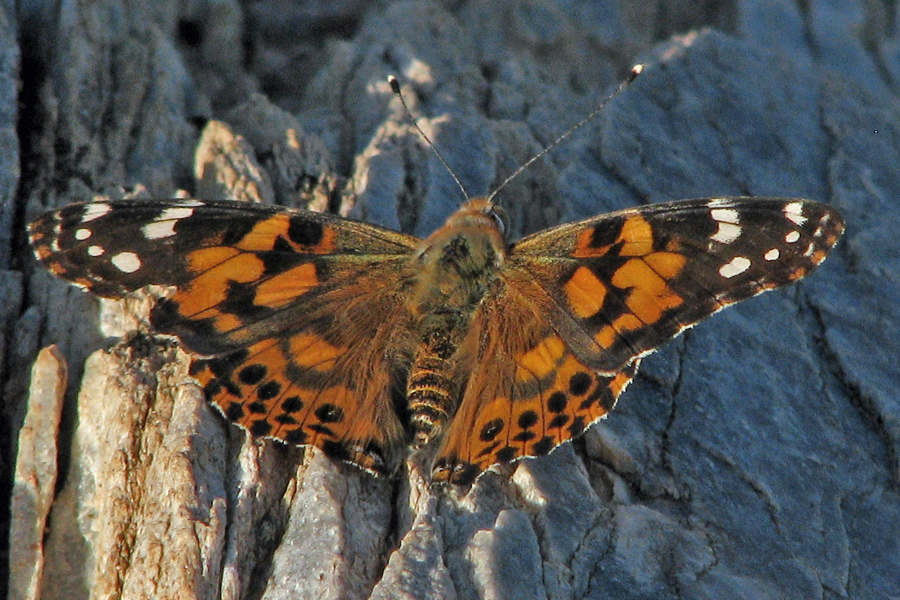
I had the privilege of hanging out with at least 4 of these critters for over an hour the other day.
One conclusion that I've reached on them is; they play hard! For the hour that I observed, they were busy doing one of three things; 1) aerial boxing with other Painted Ladies and other flying insects, 2) looking for a nice place to land and catch some Solar rays, and 3) catching rays.
Here's how it went. One would land on the rocks and open her wings, then fine-tune her aim right towards the Sun. There she locks on, and holds that position in seeming bliss, until another butterfly flies nearby. When that happens, the sunbather bolts into action, going right at the trespasser with great voracity. Several times, when this happened close to me, and I could hear their wings hitting each others. It was like an aerial boxing match.
Most of the time there was a pair going at it. Sometimes a third would join in, and a few times I saw four of them going boxing away and holding it together for about 10 seconds. Fun : )

Summer rain is a wonderful thing!
What a nice stretch of weather we have been having. It is an excellent example of the power of contrast. The week before the storms hit, Phoenix had 7 days of hot, where the temperatures did not fall below 90 degrees.
Still, a lot of storms have come close, then turned back around and left. That has been the story of our monsoon season over the past several years. Thankfully, this year, a number of storms actually made it here, and some of them were significant.
This photo is from a storm that did not make it here, but was close enough to photograph. It was interesting to observe this smallish and isolated cloud with major activity within. And right next to it was a smaller cloud with similar activity. It was beautiful to watch, and very challenging to photograph. I took over 480 shots in order to land 4 good ones, which comes out to less than 1%! Thank goodness for digital cameras : )
Raven Sky Surfing and Jousting
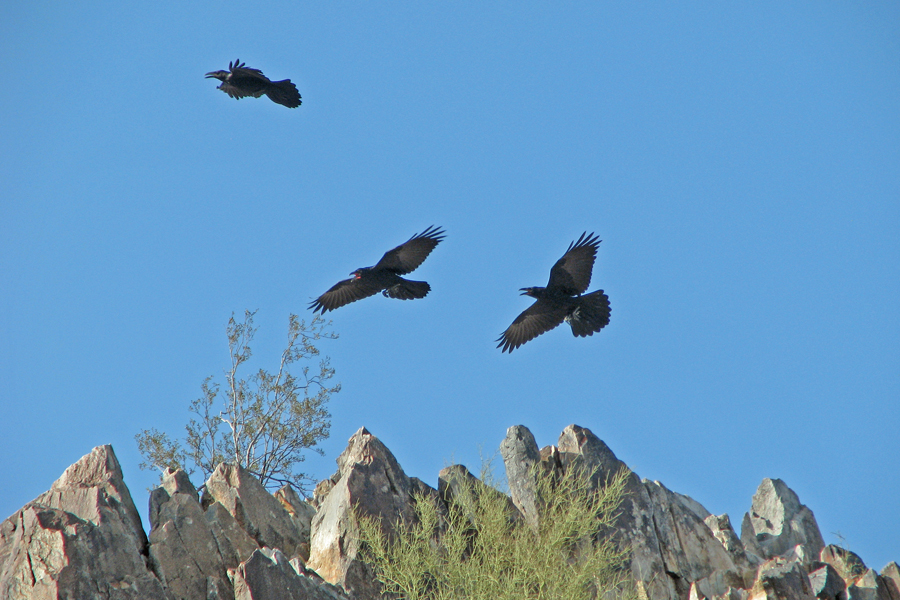
What a fortuitous encounter! About a block from my house, in The Park, is a smallish pointy peak. This peak is a favorite for some of the larger local birds, like the Hawks and Owls. Today it was the place for a group of Ravens to play. With a steady wind of 28+ windy, and they took full advantage. They were full of play and frolic, spending a lot of time Sky Surfing and Jousting.
I hung out with them for 45 minutes, which was bliss for me. Rarely do I come across such a lengthy wildlife encounter in The Park. So I sat down on the rocky ground and captured still and moving images.
I've never seen so many soft landings and take-offs before. Sometimes one would simply and gently open her wings, and the wind would lift her off and up a few feet into the air, and carry her to an offensive position in behind another bird. It looked effortless and celebratory. (Video below)
Thank you Ravens, for sharing your celebration of life, family, and wind with me...
Raven jousting, with barrel rolls!
What magnificent fliers these birds are.
Dragon cloud or...?
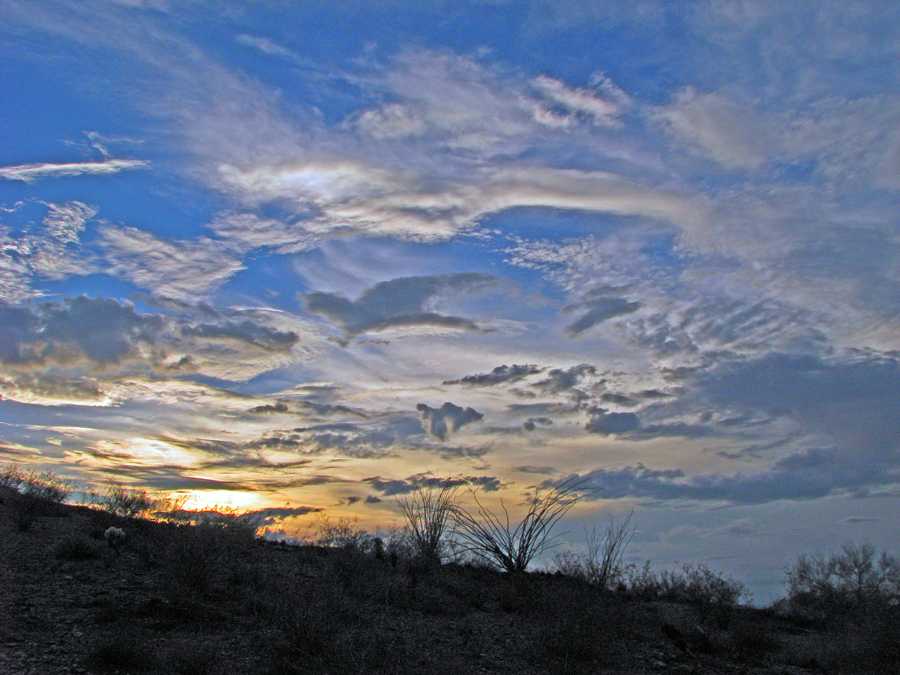
What a wonderful stretch of weather we had a couple of days ago. It felt like another time, as though our concept of time was unable to hold it. It was magical, and it was mystical. What a place this is where we live.
Part of the reason for the magical mystical effects was due to the concept of Contrast. The week previous was our most brutal stretch of very hot weather so far this summer. As high as the highs were, the hardest hit came from how high the lows were. When it is 102 at midnight, it is extreme, and it wears you down.
Then the next day is Paradise. There is no semblance of the previous week. It is a wonderfully wet fall day. How fortunate I feel to have just spent a fall day in The Park, all in the middle of summer. How fun.
This is the sunset from Saturday, July 14. The sky was very active. There seemed to be great ships and characters up there, moving across and above the earth. Is that a Dragon...?
Antelope Ground Squirrel atop a Barrel
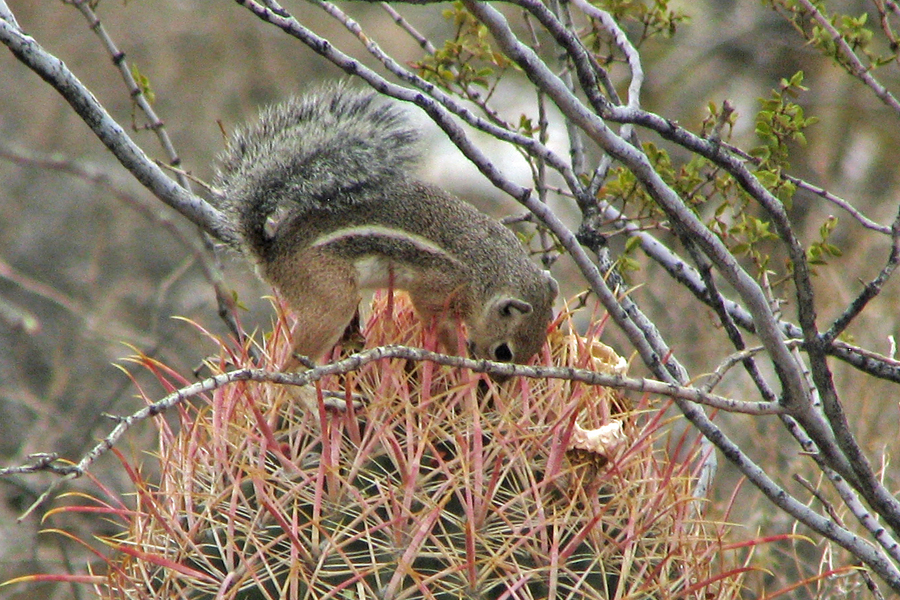
A squirrel on a cactus is one of the funnest shots in The Park. I am always on the look out for it. When it happens, it is usually over very quickly, and all you have to show for it are a few fuzzy images. Every now and then this episode will extend, as it did in this instance. This little critter was up there mining cactus fruit for about 90 seconds.
It is amazing how easily and quickly these Squirrels climb up and around and down the various different type of cactus in The Park. The Barrel Cactus must be one of the easiest ones to climb, with their "friendly" spines that are turned in at the end. I have seen these critters climbing around in Cholla cactus, which have a very sharp and barbed ends. In there, the squirrels climb around with a lot more delicacy.
When you think about it, this is an incredible scene. What athleticism, what toughness, what balance, all in the flow of a day under the sun, part of the beautiful symphony of instruments...a masterpiece.
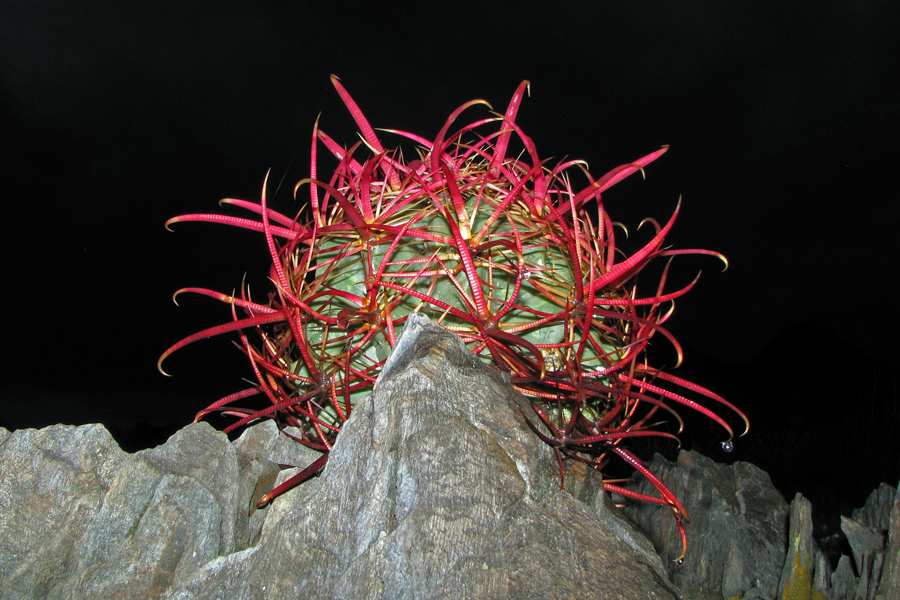
Wet baby Barrel Cactus
How I love being in The Park during and after a good rain. This image was captured back in March, after one of our rare downpours.
Each time I am out there when it is wet, I stop to capture images of the Barrel Cactus. Their tines turn so red, like there is blood coursing through them. There is a profound illumination that isn't present when they are dry.
Speaking of rain, it has been a long while since we have had a good soaking from the heavens. The Park is as dry as I can remember. The color brown is so dominant right now, with little green. This is very rough on all of the life in The Park, from the plants to the insects to the critters. It is so rough out there that the animals are taking to eating cactus, not for food, but for water. This further destroys the plant life, which is the basis for all life in The Park. It hurts to see this happening.
Hopefully we will be blessed with some great rains later this summer...
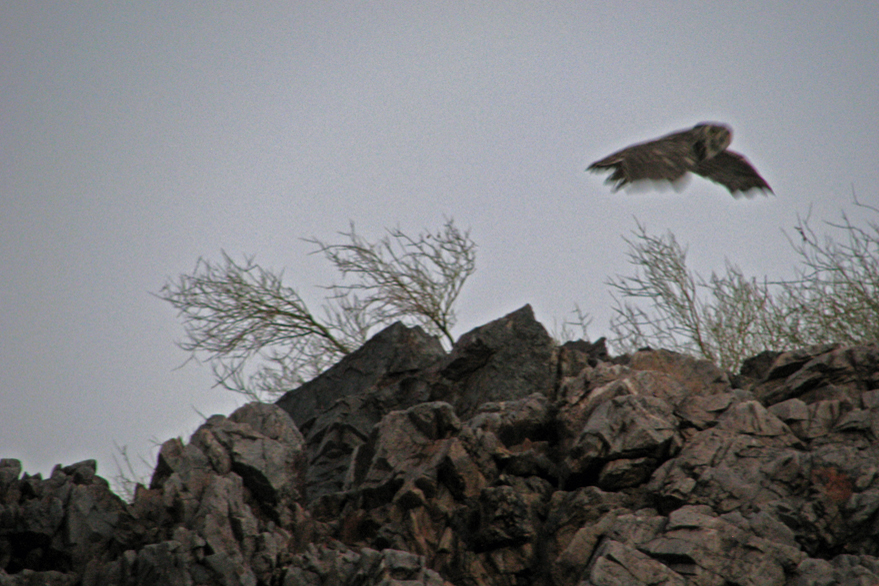
Great Horned Owl taking flight
I went for a walk in The Park the other evening. At one point I looked up to the left and saw this critter perched on the rocks above. She (?) was peacefully looking around, taking in the sights and sounds that surrounded her. I like how she has some resemblance to a bat in this image.
Owls are one of the quietest flyers in the world. They have special sound-deadening feathers incorporated into their design. These feathers give the owl an especially silent and stealthy hunting posture. I wonder how many small animals have became owl food because of this feature, where otherwise they would have scampered in time.
It is interesting to notice the different tools that are in use in the natural world. Others that come to mind are: the Zone-tailed Hawk that looks like a vulture when flying above; the Wind Scorpion with the large 'arms' that look like a scorpion's claws; and the butterflies that have faces painted on their wings, so that when they are sunning, they look like s big face with large eyes. The wonders of it all...

Hooded Oriole, Male
What a delightful encounter this was. I was walking along a trail in The Park near my house, an hour before sunset. About 90 feet away I noticed a bird atop some Saguaros, digging into some buds. At first I dismissed it, thinking that it was a Mockingbird, with the white slash across a black wing. I did notice the yellow color, but figured it had to do with the setting sun. I looked a couple of more times I decided that there was just too much yellow for it to be The Sun, so I started shooting away. Good decision...
I have only seen the Hooded Oriole twice in The Park before, and these new images are way better than those from the first encounter. It helps to be a mere 90 feet away, instead of 150 feet away. Thank goodness for long zooms!
It feels great to have some Oriole images worthy of printing. I'm tickled that he is on a budding and blooming Saguaro cactus, an unusual combination.
How I love the Sonoran Desert visitors : )
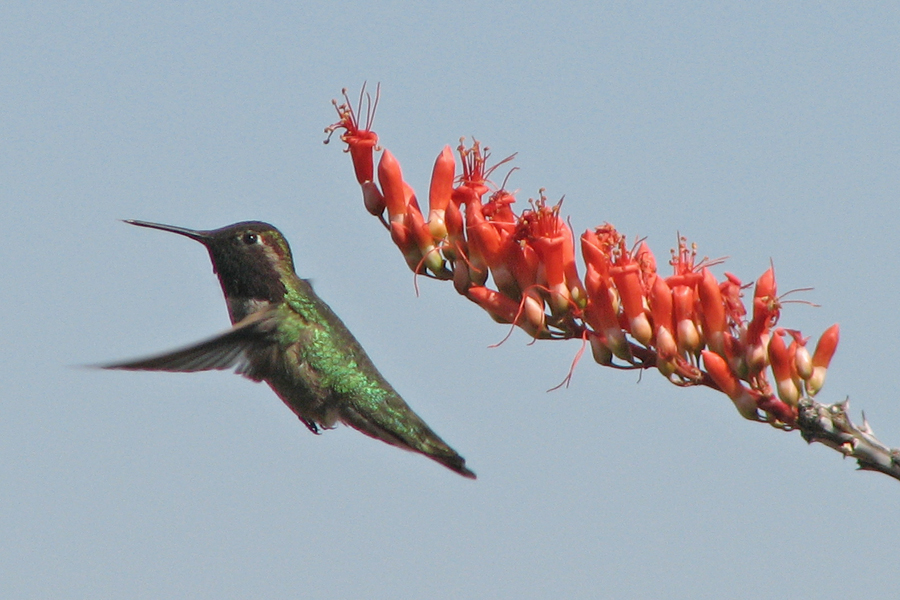
Anna's Hummingbird and her lovely Ocotillo bloom friends
The Hummingbirds sure love this particular cactus species. It's lovely to watch them work through each grouping, poking into each of the blooms with precision and speed, like a high-tech machine, yet beyond any machine that we can build. Their alertness and quickness and aggressive nature make for a unique character. I get the feeling that the nectar from this flower tastes amazingly good to these fearless flyers, kinda like the bear and honey.
They can often be spotted using the ocotillo branches as perches.
The 'thorns' of this cactus are not thorns at all, but leaves that are rolled up tight. These have gotta be some of the sharpest leaves around!
I love seeing such bright and contrasting colors harmonizing in The Park...
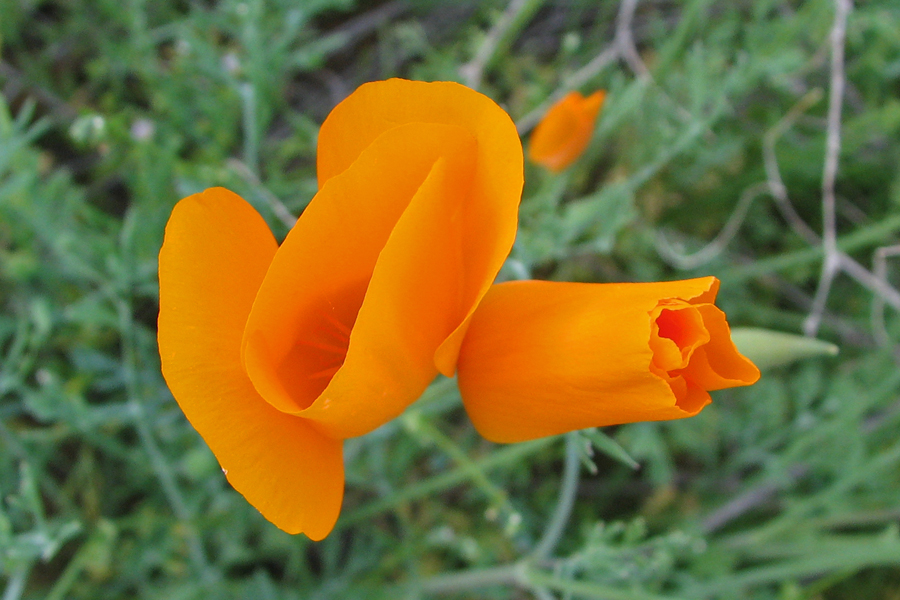
Mexican Poppy, Feb 24, 2008
What a glorious spring we had back in 2008. There is nothing like a great abundance of Poppies.
From afar, they look pretty much the same. Looking closely I was continually surprised how most all of them were drastically different from the others. Some, like these, were orange, while most of the others were yellow. Some were wide open and some were folded. There is a great deal of individuality lying within the masses that make up The Park.
Oh what a time that was...
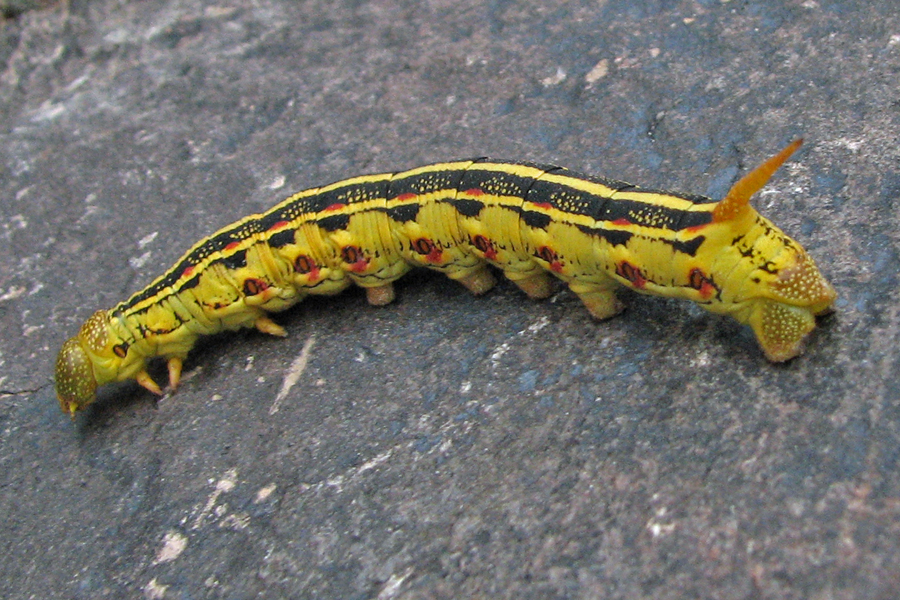
Larva of the White-lined Sphinx Moth
These critters were out in force on 9/08/08. I must have seen thousands of them. They were around for a few days, then they were gone, and I haven't seen them since. They were about 3.5 inches long.
Thanks to my friend Walt Anderson (GeoLobo.com) for identifying this critter for me. I had originally suspected that it was the larva of a Rustic Sphinx Moth, a critter I photographed a few years previous.
The coloration of this caterpillar is impressive. The accenting use of red against the yellow and black is striking. I would love to know why and how this particular and complex color pattern came to pass. Look at how odd the legs are. In the front they are spindly, and in the back they are like pillars with suction cup ends. When I print this image to 6' long, it looks like a creature from another planet.
Here is a link to more info on the White-lined Sphinx
You never know what you'll find in The Park...
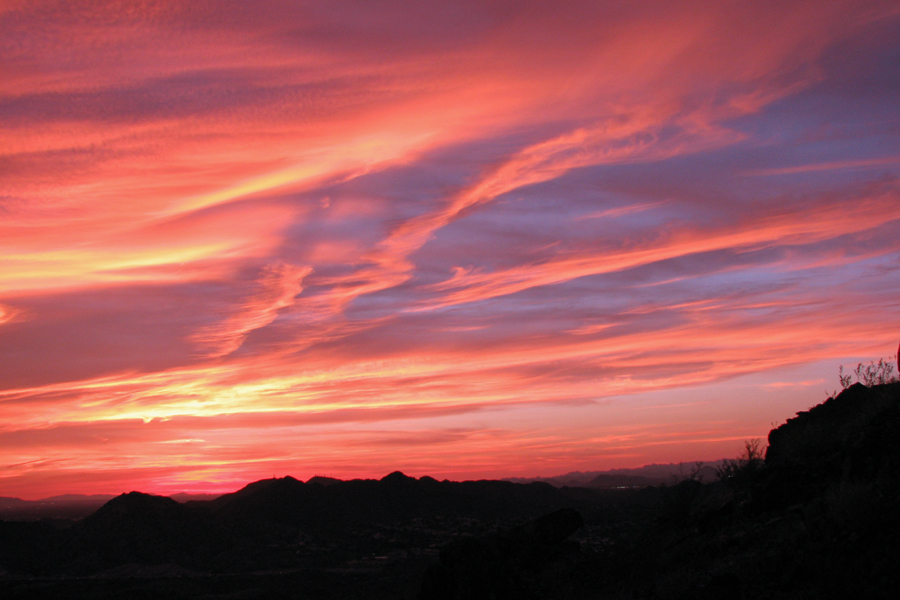
Such a sunset, 8-12-08
Looking back through the archives for images to share, I came across this beauty, just over 3 years ago.
We sure get our share of brilliant 'paintings in the sky' around here, either first thing in the morning, or at the end of the day.
I love the way the colors change as the seconds tick by. Brilliance fades to muted...delicate colors mixing and blending.
How lucky are we...
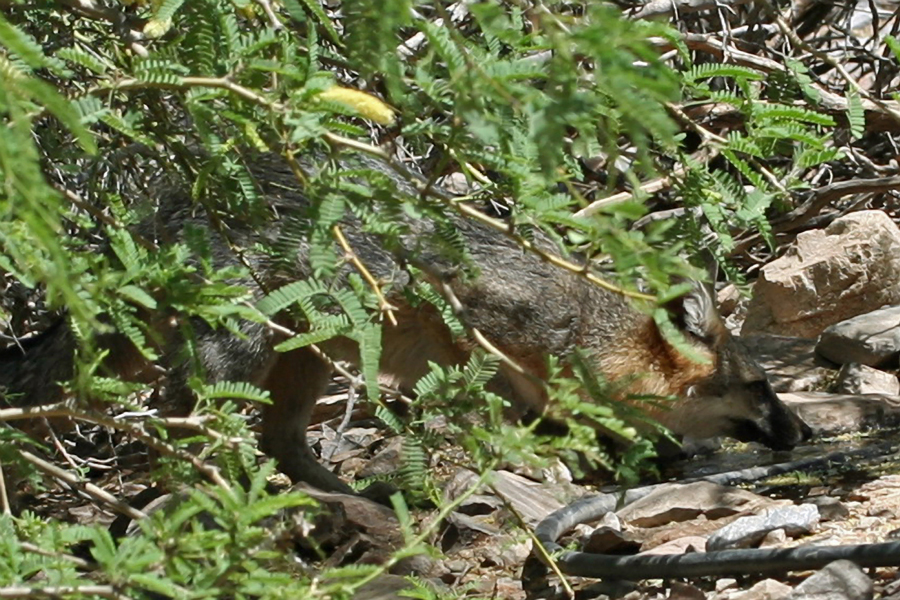
Gray Fox
This is the only image that I was able to capture during my first and brief encounter in The Park with a Gray Fox.
I love the fact that these elegant animals are out roaming The Park, in both the daytime and at night. Whether or not they live here, or just visit, is beyond my knowing. I like to think that they do indeed call The Park home.
Thank you for gracing us with you magnificent presence.
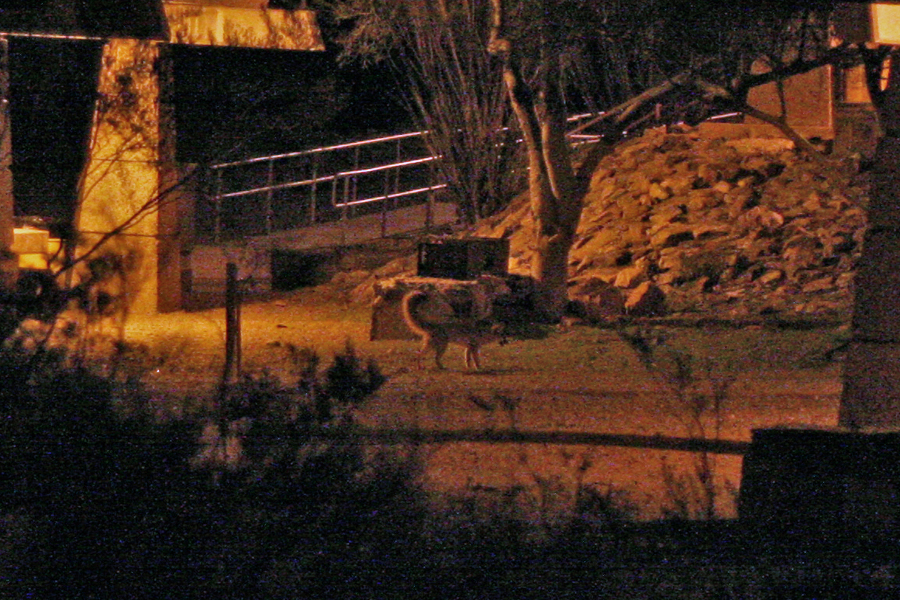
Grey Foxes out walking a ramada
This is the second Grey Fox encounter that I have had. There were 2 of them making their way around the picnic tables.
The way that they walk is so cat-like, so elegant, so flowing. They are like creatures from a different planet, or another part of the world. Those tails are so very long and expressive...mesmerizing.
I hope to capture some clear images in the future, but for now this is what I have to show. There sure are a lot of interesting characters that make up the whole of this incredible space.
Such an exhilarating and surprising experience, even from a distance.
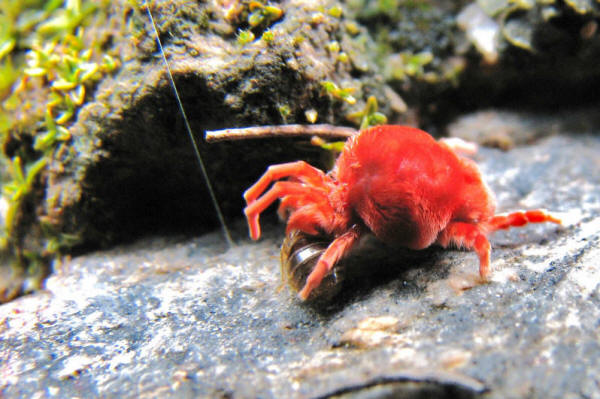
Velvet Mite
This little critter, about the size of my fingernail, is doing one of the jobs that Velvet Mites do: eating grasshopper larvae after a rain.
These creatures only appear after the rain in the warmer months, and only sometimes. They really stick out from the browns and grays of the ground. I wonder why they have such thick fur, like a cuddly teddy bear. What a stuffed animal this would be in huge scale, like a queen bed : )
I am fascinated by such creatures. I admire it as a great fellow earth dweller, as one of the trillions that grace our planet, participating in the elaborate and symphonic balance of nature.
Velvet Mite
Here is a short video clip of the Velvet Mite above. He is busy trying to consume this grasshopper larvae, and is not too keen with my interrupting his lunch plans. He is torn between continuing to eat and taking his lunch to a more private spot. I felt a little bad for the interruption, as I don't like having my meals interrupted.
In an isolated view like this, one can envision this critter on another planet, making way through his day.
I find it curious that the red color is so bright, making these bugs stand out against the desert floor. What's the reason for such a 'screaming' color? Maybe they are somehow yucky to the usual predators, and the red color makes that clear.
Something more to explore...
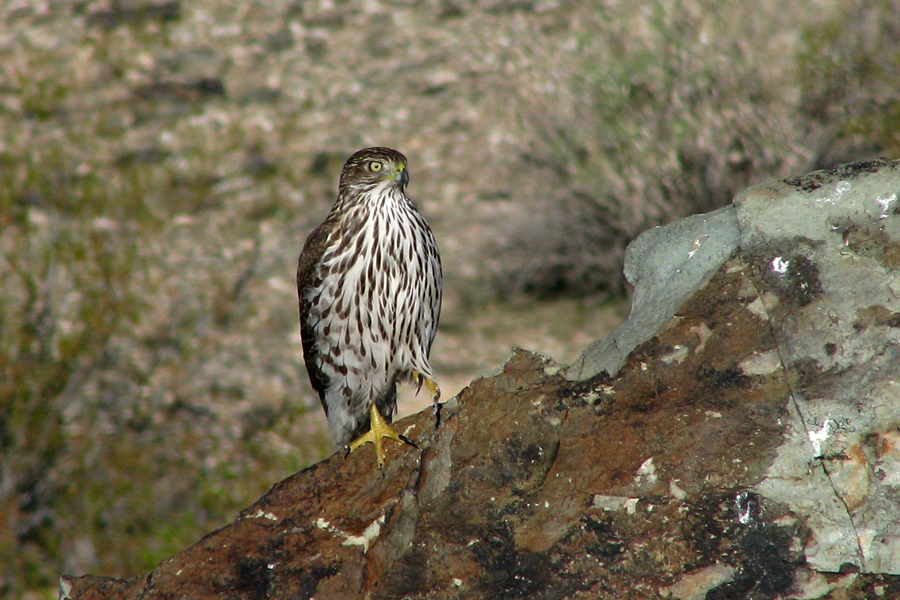
Coopers Hawk looking for lunch
I encountered this handsome bird a few blocks from my house, where The Park juts out to the north. I never realized how fully patterned the breast is, completely covered in brown designs. It looks a bit like some kinda something swimming in a downwards direction.
I love the eyes of the predator birds. They seem so wide opened, taking in oh so much of what is going on around.
It looks like this bird spotted something, and is taking a step to set-up for take-off. Maybe lunch today will be a quail, or a dove, or maybe it will be a Spiny Lizard, sitting out in the open on a rock catching rays.
Road Runner in flight
How often have you seen a Road Runner fly? Never? Why not? Because it rarely happens for any significant length of flight.
I have been wanting to capture this particular action for some time now, and today was the day.
I heard a pair these speedsters clacking this morning, but I couldn't spot them. After about 12 minutes I finally saw them atop a rocky knoll. Just then, one of them flew away and down, too quickly for me to catch. I felt sure the other was about to follow so I started recording video. After about 9 minutes of capturing video of a perching critter, this great bird took off with two wing flaps, then glided down in the opposite direction of the other.
Of all the times I have seen them fly, almost all have been gliding down like this. One interesting note; the wing-flapping at the beginning looks like the flapping of the Mockingbird, who happens to be the star of the next video.
Coyote harassed by a Mockingbird
Mockingbirds have a strong drive to relentlessly harass other critters. It seems like they spend a good portion of their time doing this. Usually it is other birds, though they will take on just about any creature out there.
This is the first time I have ever seen this done to a Coyote. This bird actually nipped the canine in the butt several times.
The coyote seems to be younger, like a teenager. At first he(?) doesn't really get it, and continues to walk on. After the second nip he breaks out into a trot, and a little faster after the third. After the fourth nip the coyote takes off at a good running clip. What a crazy experience for a young and timid coyote to experience. I wonder if it had any long- effects, like if it became paranoid of Mockingbirds.
I wonder the reason for this Mockingbird behavior. They seem unable to help themselves when an opportunity comes along. As fun as it is to watch, I feel a bit cringy for the coyote, who looked a bit stressed and afraid to begin with.
These 4 young Ravens got a surprise visit when a female Anna's Hummingbird came along. It looks like she thought that red color of the birds' mouths was a flower. I wonder...if the bird would have stuck her beak in, would the baby have chomped down on her, thinking she was food from Momma? I figure the quick Hummer would have avoided that easily.
This is another example of how fun and interesting it can be when 2 different species come together. I find such interactions magical.
How many wonderful such situations are taking place throughout The Park on a daily basis. Imagine the different possible combinations of animals coming together, face-to-face.
This is a magical place...
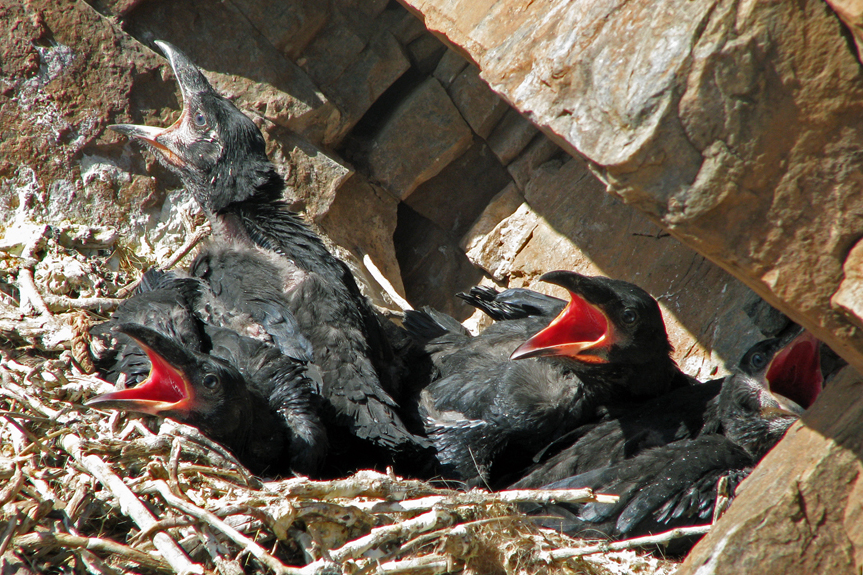
Raven babies way up top
These youngsters spent their formative weeks just under the highest point in The Park. I have been told that they open their mouths to let out heat, as well as the eating thing.
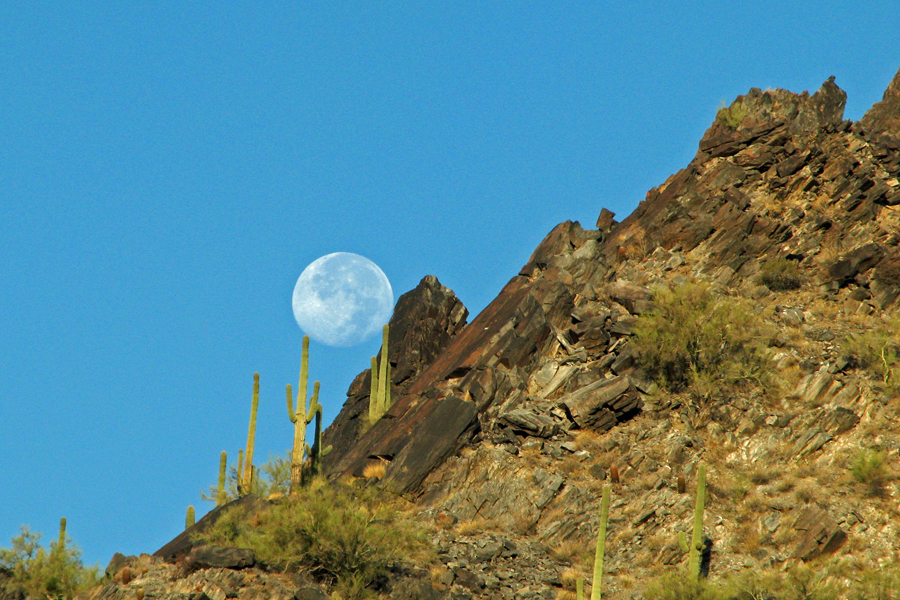
The Moon gets some Desert Love
I enjoy watching and capturing images of the Dancing Moon...seemingly prancing along and down the profile of the mountain, being caressed and held by the rocks and cactus as she does. I love it when the celestial and the earth meet...something deeply calming and peaceful.
click any image for larger version
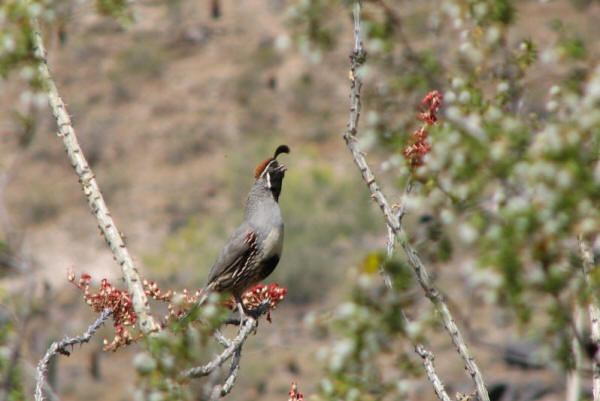
Male Gambel's Quail Cooing
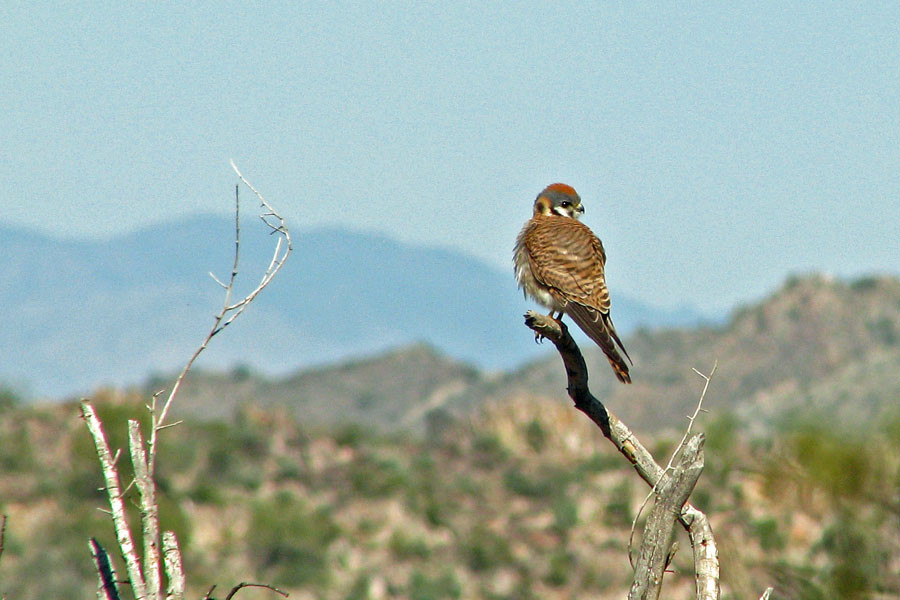
I had been hoping to see another Kestrel, so it was with excitement that I photographed this beauty. She was busy flying around the desert looking for something to eat. She did capture a tidbit, but I were unable to identify what it was. I've seen one eat a caterpillar and a lizard before.
These are the smallest falcons in North America, about the size of a White-winged Dove.
click on any photo to see a larger version.
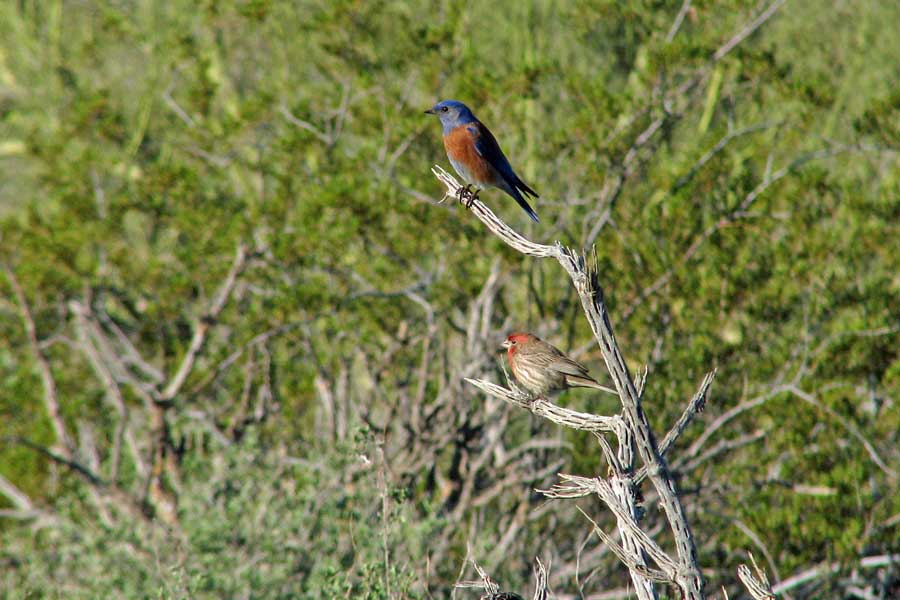
Well, the Blues are still with us. It has been 7 weeks since the first encounter, and they still seem to be loving it here. It makes me wonder if they have set up shop in The Park, with nests and all.
I love getting 2 different species in the same shot. There is something about the contrast and compare, especially when they both have some nice color going on. The Finches and the Sparrows seem to enjoy having the Bluebirds around. I will often times see them hanging out with these colorful visitors.
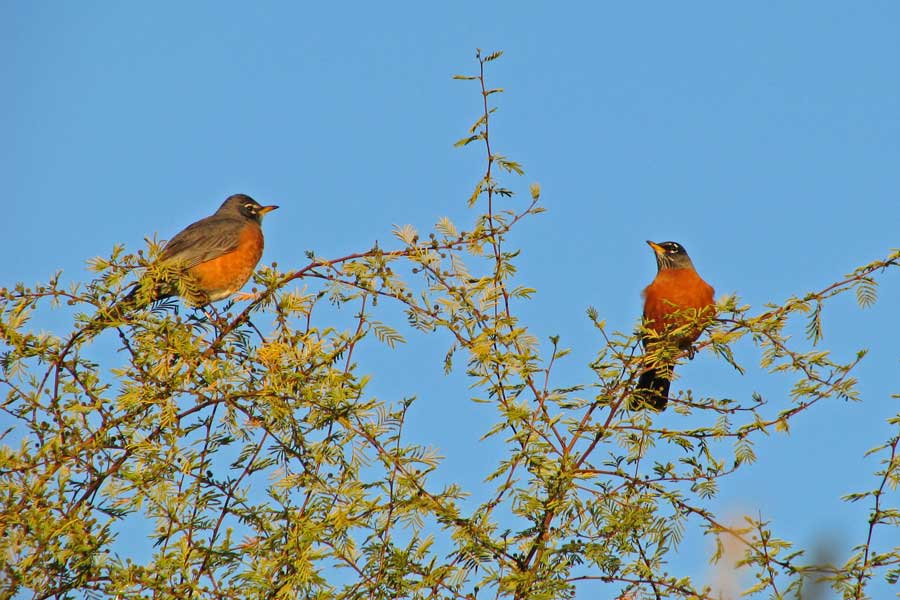
They have arrived, and they seem to like it here. It has been a few weeks now that the Robins have been running around The Park.
The American Robin is normally found in the higher elevations, making their visit a special treat, and it is good to have them hang around for a while.
This looks to be a couple, with the male on the right and the female on the left. As with many bird species, the male has more color than the female.
Thanks for visiting us oh flitty ones...
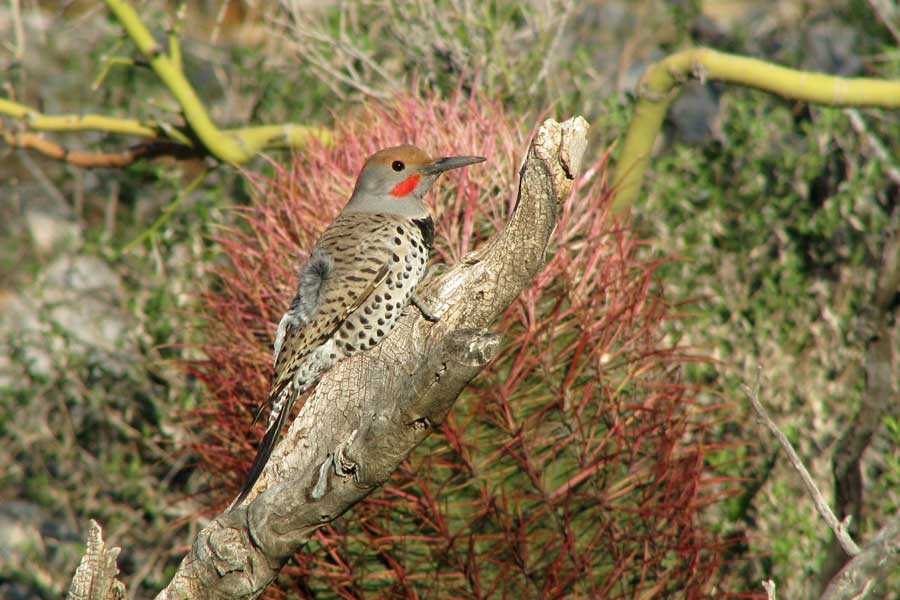
Here is another of The Park's great beauties. You can tell he is a male by the red face paint. All 3 varieties of woodpeckers in The Park use red to mark the males, with the Gila and the Ladderback marking located on the top of the head.
This guy was busy pecking on this snag. I can't figure out why. It didn't seem like he was doing it for insects, more like he was just doing it to do it. Maybe it helps keep his beak ready, or maybe it just feels good. I think it is because it feels good on his brain. Anyway, it was sure great to watch and hear him go about it.
Below is a video clip of the pecking in action.

Gilded Flicker, male
Here he is again, just after take off.
In this shot it is easy to see why they are called Gilded Flickers, with that magnificent golden color on the underside of the wings.
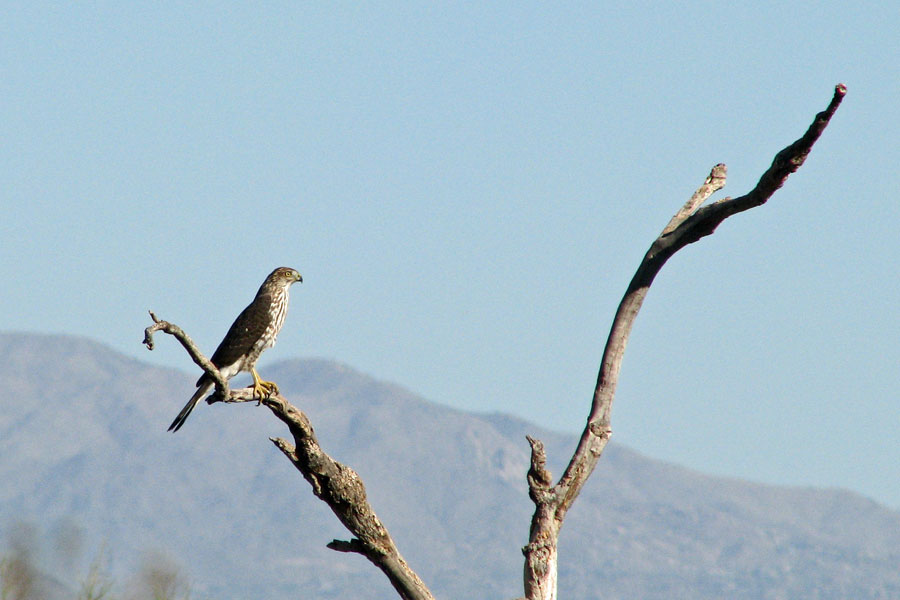
Cooper's Hawk

It is always a treat to come across one of these beauties. The Ladderback is one of 3 woodpecker species in The Park. These are especially active, and spend a lot of time on the ground.
Ladderbacks have one of the most interesting pattern designs of any critter in The Park. There is the swirly face paint, which reminds me of the middle portion of a rolled ice cream cake. Then there are the delicate white spots on the front of the red cap, like paint splatter from a fine brush. Then there is the back...so much going on there...the stripes, the dashes, and the spots...oh my!
What an impressive and fascinating outfit you wear Mr. Ladderback!
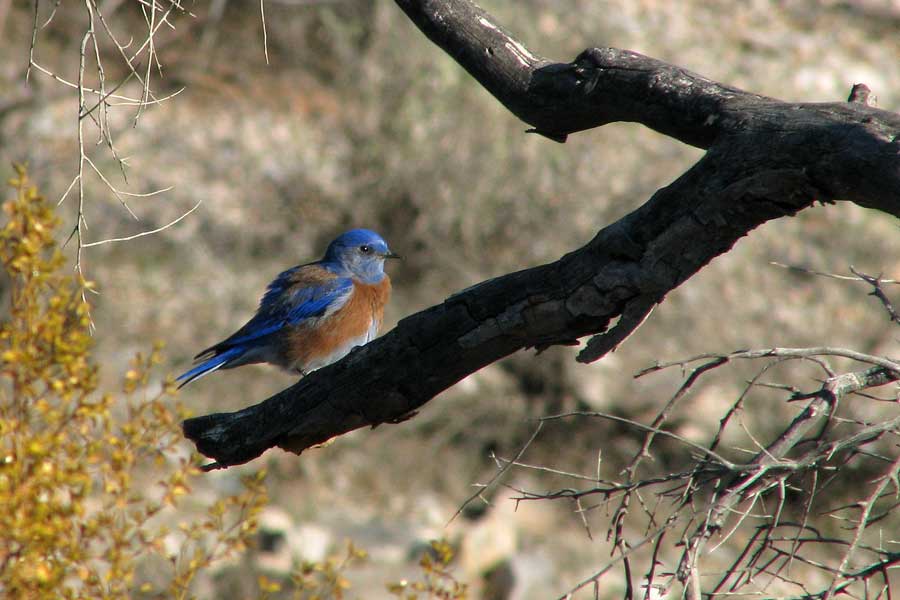
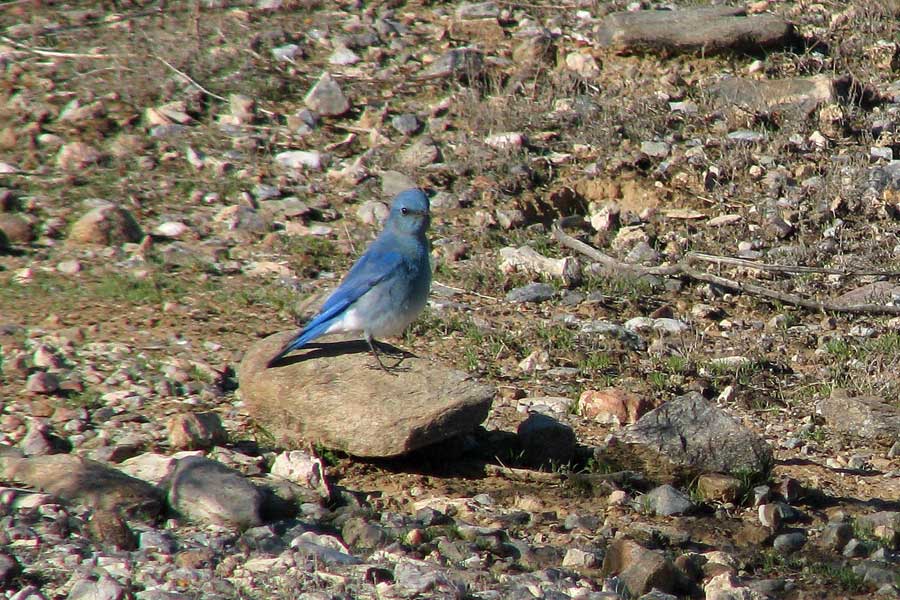
I experienced a Blue invasion today. About 15 Western Bluebirds rolled through The Park, and I was fortunate enough to be there. They were great models, seemingly posing for me. What a great addition this is to our list of wonderful critters found in The Park.
The top bird is a male Western Bluebird, and the bottom bird is a male Mountain Bluebird. I hear that it is quite rare to see a Mountain Bluebird in the desert. It was very interesting how he was seen flying with Western Bluebirds, like somehow the Blues like to stick together.
What a beautiful experience. So much color and such a presence.
Thank you blue beauties, for stopping by and for being so friendly.
Here is a link to a site with some nice Bluebird information: Arizona Birds
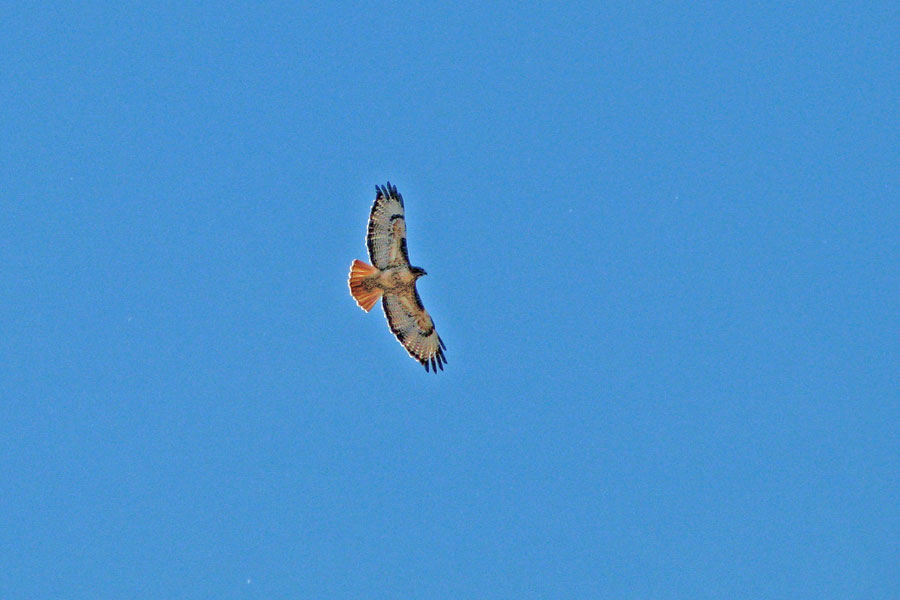
Red-tailed Hawk
How I love watching Hawks circling the skies above...
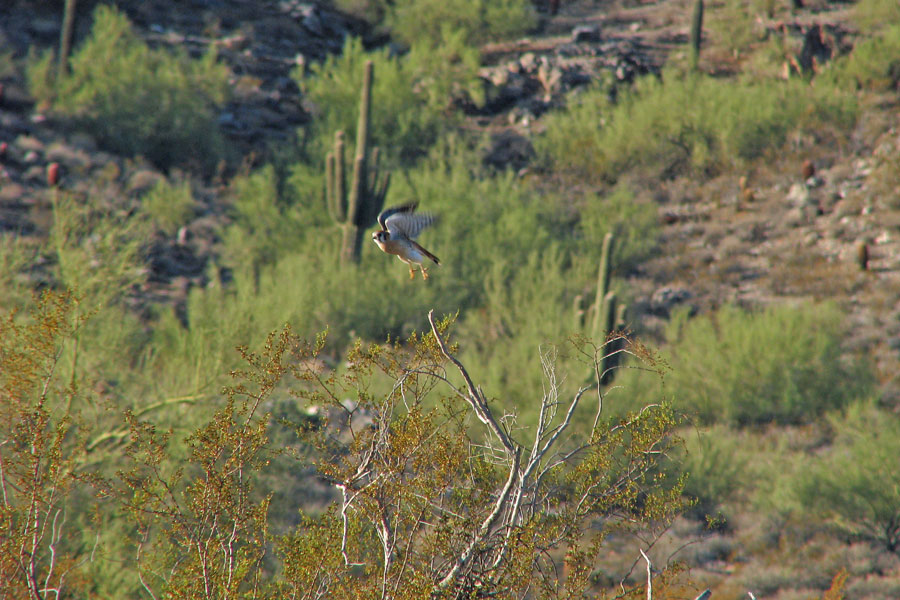
American Kestrel, male
The male American Kestrel was perched inconspicuously on a branch several hundred yards away. I was fortunate to capture an image of him just after take off
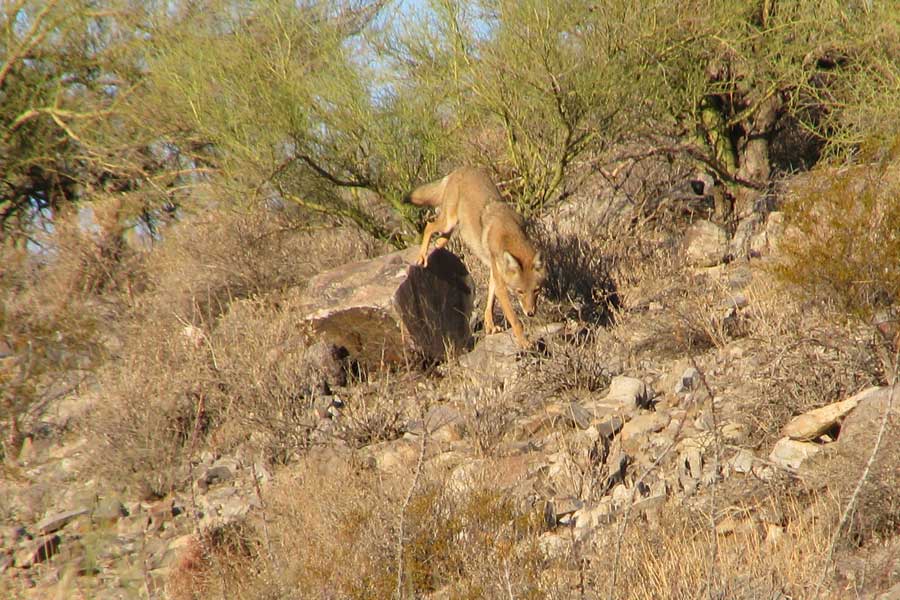
Coyote
Here is one of a pair of Coyotes that I encountered. I was tipped off to their arrival by a couple of jackrabbits that were running along in an unusually speedy fashion. The Coyote in the photo stood up on the rock hoping to get a glimpse of the rabbits, but they were out of sight by then. The Coyotes moved quickly down the mountain to the flat areas, and were soon out of sight.
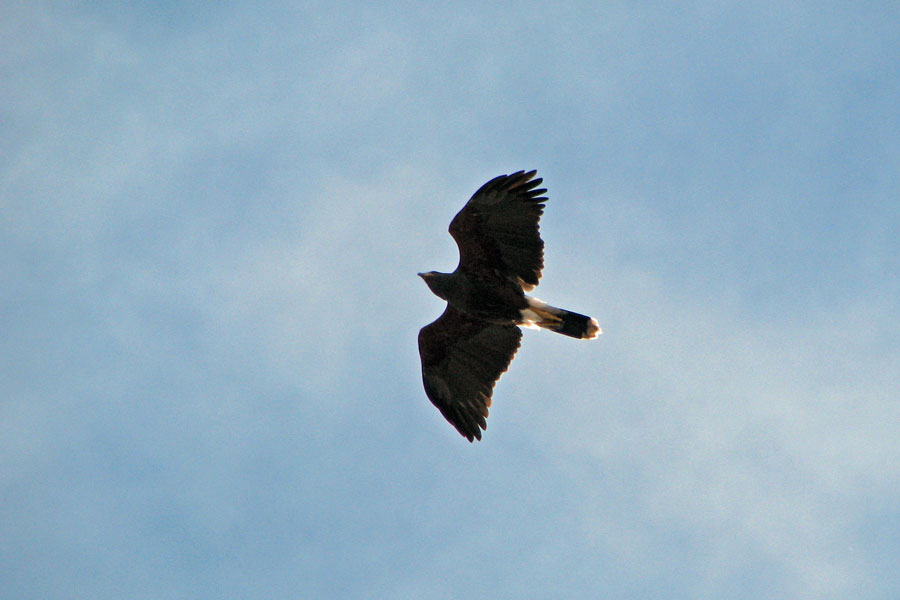
Harris's Hawk
all images on this page copyright Joe Phillips
Email address Joe(at)AZJoe.com